
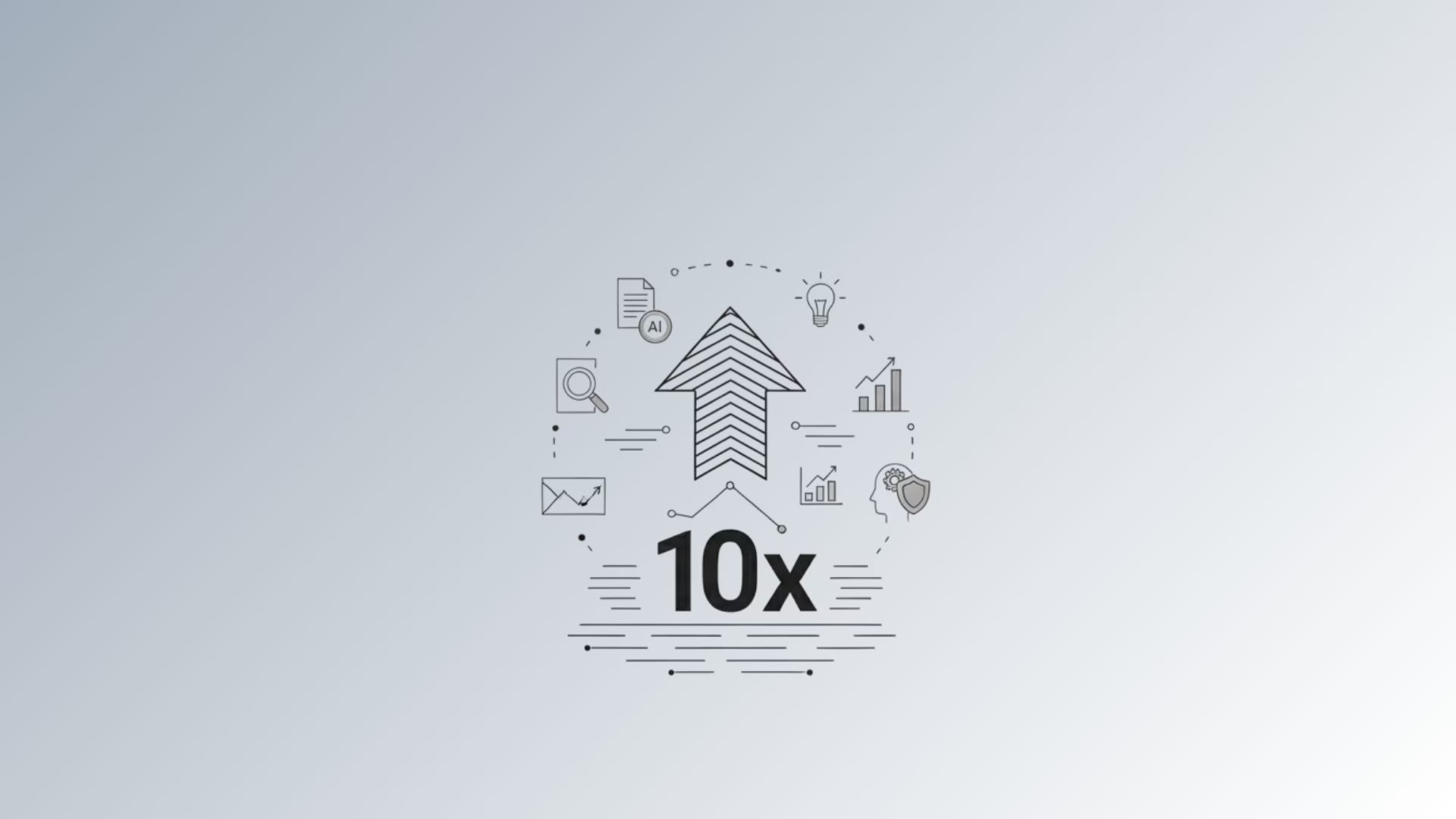
B2B buyers spend only 17% of their total purchase journey meeting with potential suppliers (Gartner). Your digital footprint is your most influential salesperson. With 90.63% of all web pages receiving zero traffic from Google (Ahrefs), generic publishing is no longer a viable strategy. Only “10x content” – material ten times better than the top-ranking result – can cut through the noise of the 4.4 million blog posts published daily.
The solution lies in shifting focus from quantity to a standard of excellence that is ten times better than the highest-ranking result for a given keyword. By addressing the specific pain points of a professional audience with unparalleled depth and utility, brands can secure the top positions on search engine results pages. This approach does not merely aim to compete; it seeks to render existing alternatives obsolete by providing a definitive resource that satisfies the searcher’s intent so thoroughly that they have no need to return to the results page.
Key Takeaways
- The 10x Content Standard: 10x content is a strategic asset that is 10 times better than the current top-ranking result on Google. It prioritizes depth, proprietary data, and user experience to solve complex B2B challenges more effectively than any competitor.
- Volume vs. Value: Modern SEO success requires a shift from frequent, thin publishing to infrequent, high-value assets. Google’s algorithms and LLMs like ChatGPT reward comprehensive research and authoritative insights over keyword-stuffed, derivative articles.
- Comparative Advantage: While the Skyscraper Technique improves upon existing content, 10x content renders it obsolete. It uses interactive tools, expert interviews, and primary research to provide a definitive resource that satisfies user intent entirely.
- B2B Trust Triggers: Decision-makers use high-quality content to mitigate purchase risks. Providing original research and proprietary frameworks establishes your brand as a market leader and gives your audience valuable social currency for internal sharing.
- Technical Excellence: For LLMs to index content, technical architecture is vital. Implementing Schema markup, Semantic HTML, and optimizing for Core Web Vitals ensures your content is eligible for featured snippets and AI-driven direct answers.
- Sustainable ROI: High-quality digital assets act as a “competitive moat,” driving compounding traffic and organic backlinks over time. This reduces cost-per-lead compared to recurring PPC expenses and builds long-term brand equity and trust.
Why Is the Shift from Content Volume to Content Value Critical for Modern SEO?
The shift to value is critical because search engines like Google, powered by LLMs such as Gemini, now prioritize “Information Gain.” High-volume, low-value content from platforms like HubSpot or Forbes no longer guarantees ranking without unique, authoritative depth.
During the previous decade, the digital marketing landscape was overwhelmingly dominated by the mantra “content is king.” While originally intended to highlight the necessity of quality, this concept was widely misinterpreted, leading many organisations to believe that publishing frequency was the primary driver of organic success.
Consequently, the market became saturated with derivative, surface-level articles that offered little more than a superficial rehashing of existing information. This “volume-first” approach ignored the nuances of user intent and the specific needs of specialised audiences, resulting in a digital environment cluttered with redundant filler. However, modern search algorithms have undergone a sophisticated evolution; they are now engineered to detect and penalise such superficiality, preferring instead to reward content depth and authoritative insights that provide genuine, unique value to the reader.
When a brand chooses to invest in 10x content, it consciously moves away from the exhausting “hamster wheel” of daily publishing that often leads to creative fatigue and diminishing returns. Instead of producing five mediocre posts a week that barely scratch the surface of a topic, the strategic focus shifts toward crafting one monumental piece of work every month. This paradigm shift acknowledges that contemporary B2B buyers are more discerning, sceptical, and time-poor than ever before.
These professionals do not have the luxury of wading through redundant material; they require immediate, high-level solutions and “first-principles” thinking that demonstrate a profound understanding of their industry’s complex challenges. By delivering a resource that is significantly more comprehensive than anything else available, a company effectively positions itself as the ultimate authority in its niche.
- Higher engagement rates: Exceptional quality encourages longer time-on-page and lower bounce rates.
- Natural link acquisition: Truly unique resources act as “link magnets,” attracting high-authority backlinks without intensive outreach.
- Enhanced brand perception: Providing a definitive guide establishes the organisation as a thought leader rather than a mere participant.
- Long-term ROI: While more expensive to produce initially, these assets continue to drive traffic and leads for years.
How Does 10x Content Compare to Traditional SEO and Skyscraper Techniques?
10x content surpasses the Skyscraper Technique by offering “Immersive Utility.” Unlike standard SEO or Backlinko’s Skyscraper method, 10x strategies utilize primary data, custom interactive tools, and expert interviews to solve holistic problems rather than just updating existing lists.
To understand why this methodology is superior, one must examine how it compares to standard industry practices. Most organisations still rely on “Skyscraper” techniques or basic SEO blogging, which often result in a repetitive echo-chamber of information. While these methods were once effective for gaining visibility, they often fail to provide the “wow factor” necessary to disrupt a competitive niche or satisfy a sophisticated audience. The following table illustrates the divergence in quality and impact between traditional approaches and the 10x standard.
| Feature | Standard SEO Content | Skyscraper Technique | 10x Content Strategy |
| Primary Goal | Keyword ranking | Outdoing the top result | Creating the definitive resource |
| Research Depth | Surface-level / Secondary | Competitive benchmarking | Primary data / Expert interviews |
| User Experience | Template-based | Improved layout | Custom, interactive, or immersive |
| Visual Assets | Stock imagery | Basic charts | Custom infographics and video |
| Search Intent | Informational (Basic) | Informational (Comprehensive) | Holistic problem-solving |
| Longevity | Short (Frequent updates needed) | Medium | Exceptional (High durability) |
Transitioning to a high-calibre output requires a significant realignment of internal resources and budget allocations. Blending data science yields proprietary insights. Sophisticated graphic design clarifies complex concepts, while deep subject-matter expertise keeps claims nuanced and accurate. When these elements are integrated, content evolves beyond a blog post. It becomes a usable tool or immersive experience that competitors struggle to copy. This shift ensures that your brand provides a level of utility that makes standard alternatives appear obsolete.
What Psychological Triggers Drive B2B Decision-Makers to Prefer Authoritative Content?
B2B decision-makers prioritize “Risk Mitigation” and “Social Currency.” They trust original research and proprietary frameworks from firms like Gartner. McKinsey is also trusted for similar assets that prove a vendor’s intellectual capital. These assets reduce the perceived professional risk of a purchase.
Thus, decision-makers are not merely browsing for tips. They seek a strategic partner who shows a granular understanding of their vertical’s unique complexities. When they encounter a resource that provides original research or distinctive proprietary frameworks. It prompts a clear psychological respect and reliance on the provider. This level of exhaustive detail proves the brand has invested significant intellectual capital to solve problems. Others have merely touched upon them, thereby reducing the perceived risk of engagement.
Furthermore, the professional incentive to distribute such high-calibre material is remarkably high. In corporate circles, individuals share content that reflects their own status as well-informed, forward-thinking specialists within their industry. By producing an “all-encompassing” guide, you provide your audience with indispensable social currency. This establishes a virtuous cycle where your primary prospects effectively become your most powerful distribution channel. As they disseminate your work across LinkedIn and internal corporate communication channels, they provide your brand with an organic, peer-reviewed seal of approval that traditional advertising cannot replicate.
Which Technical Frameworks Ensure the Architecture of High-Performance Digital Assets?
High-performance assets require Semantic HTML, Schema.org markup, and Core Web Vitals optimization. Leading tech companies like Stripe and Vercel use these technical standards to ensure LLMs like OpenAI’s GPT-4 can easily parse and index complex data structures for rich snippets.
Beyond the prose, the technical execution of a 10x piece is what often cements its position at the top of the rankings. The page must be faster, more accessible, and mobile-friendly to keep the user experience fluid on every device. A seamless user interface is paramount; it ensures that the intellectual depth of the information is never obscured by poor navigation or slow load times. To achieve this, organisations often incorporate sophisticated interactive elements, such as dynamic calculators, searchable databases, or custom data-visualisation modules. These features transition the page from a static document into a high-utility functional tool, encouraging repeated visits and deeper user engagement.
The architecture of the page must be meticulously designed to guide the reader through a logical and intuitive progression of ideas. This involves utilising semantic HTML and sophisticated structured data (Schema markup) to help search engines decipher the context and hierarchy of the information. By clearly defining relationships between data points, you increase the likelihood of your content appearing in rich results and featured snippets. Furthermore, a focus on accessibility ensures that the content is consumable by all users, reflecting a commitment to inclusivity that search algorithms increasingly reward. When every technical detail—from image compression to lazy-loading—is polished to perfection, the content stands out as a beacon of quality in a sea of automated and AI-generated noise.
How Do Definitive Digital Assets Create a Long-Term Competitive Moat?
Definitive assets create a “Competitive Moat” through compounding authority. By becoming an industry standard—similar to the “State of Marketing” reports by Salesforce—these assets generate organic backlinks and user loyalty that paid acquisition channels cannot replicate.
The ultimate goal of this elevated strategy is to create a digital asset that remains relevant and authoritative for the foreseeable future. While news-based or “thin” content devalues almost immediately upon publication, a cornerstone resource continues to accumulate authority, backlinks, and traffic through a compounding effect that serves as the secret to sustainable organic growth. Over time, the cost per lead generated by such an asset drops significantly; while the initial investment is high, the maintenance cost is negligible compared to the recurring fees of PPC campaigns. This allows the asset to eventually outperform paid acquisition channels, which require constant financial injection to remain visible.
Furthermore, this approach creates a “competitive moat” that is difficult for rivals to cross. When you provide a resource that is integrated into the workflows or decision-making processes of your target audience, you occupy a space in their mind that cannot be easily bought with ad spend. Investing in such excellence is a clear statement of intent to the market. It demonstrates that your organisation is not interested in the status quo but is dedicated to pushing the boundaries of what is possible in your field. This dedication to quality fosters a sense of loyalty and perceived value that transcends simple transactions. By consistently delivering value that is exponentially better than the alternative, you do not just win the click; you win the customer’s long-term trust and advocacy.

Turn deep topical authority into a defensive growth moat
Generic publishing no longer wins in search or AI answer engines. Whether you need to benchmark your current digital footprint or structure your brand as the primary cited source across Google, ChatGPT, and Perplexity, select your preferred path below:
← Back to the Citadel of Content
Frequently Asked Questions About 10x Content
What exactly defines 10x content in a B2B context?
It refers to content that is at least ten times better than the currently top-ranking result. It combines superior UX, unique data, expert insights, and comprehensive answers to user intent.
How does this approach affect long-term SEO performance?
By focusing on extreme quality, you naturally earn high-authority backlinks and maintain high dwell times. These signals tell search engines your page is the most relevant, ensuring stable, long-term rankings.
Is it necessary to use custom visuals for every post?
While not every post requires it, 10x content specifically demands high-quality, original visuals or interactive elements to distinguish it from the standard, derivative content found elsewhere on the web.
Can small marketing teams realistically produce 10x content?
Yes, by prioritising quality over frequency. Instead of spreading resources thin across many average posts, a small team can consolidate their efforts to produce one truly exceptional piece periodically.
Sources
- [1] Everything You Need to Know About 10x Content | SEOLeverage™️
- [2] How to Develop the 10x Content | 10xDS
- [3] 10x Content Creation Process & Checklist
- [4] 10x Content: What It Is and How It Works
- Rand Fishkin (Moz/SparkToro): Why “Good, Unique Content” Needs to Die. For a curated list of live examples, see his 121 Examples of 10X Content.
- Backlinko (Brian Dean): Skyscraper Technique 2.0: How I Increased My Organic Traffic 652% in 7 Days.
- HubSpot: 2025 State of Marketing Report and Marketing Statistics Database.
- Rand Fishkin’s original explanation of 10x content.